
.png)
Somewhere in the last eighteen months, the industry quietly stopped asking "can generative AI do this?" and started asking "why isn't this in production yet?" That shift — from curiosity to accountability — is the entire premise behind GENAIX 2027, and it's why this Generative AI Summit looks fundamentally different from the ones that came before it.
If you attended any major AI conference in 2023 or 2024, you know the pattern. A keynote demo that looks like magic. A panel full of consultants describing "the future of work" in abstractions. A vendor floor selling the same three use cases with different logos. It was fun, once. It's also, by 2027 standards, a little embarrassing to still be doing.
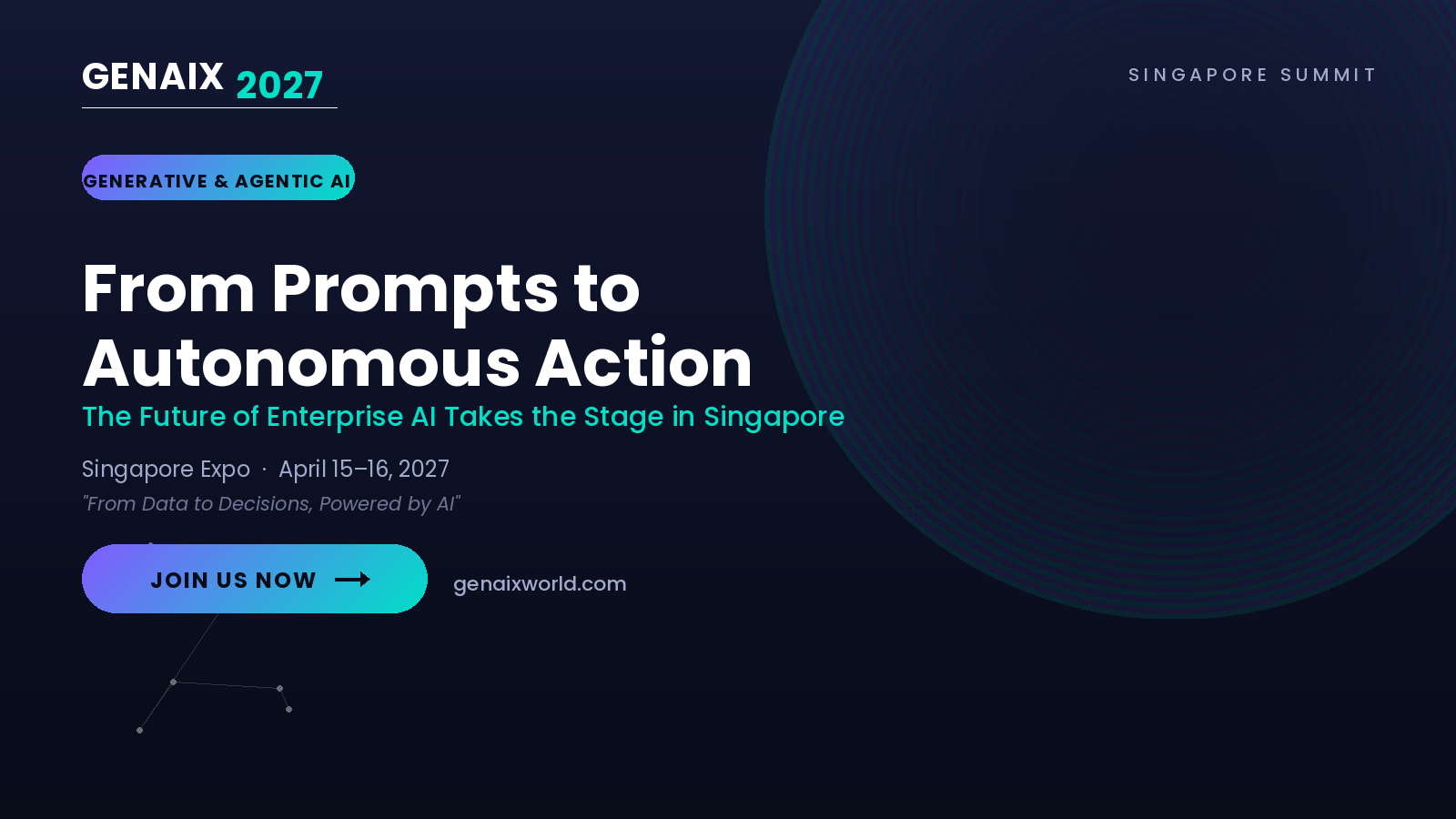
GENAIX 2027 — the Global Generative & Agentic AI Summit, taking place April 15–16 in Singapore — was built around a harder, more useful question: what actually happens after the pilot? Not the demo. Not the proof of concept sitting in a innovation lab slide deck. The real, messy, expensive work of getting a generative model into a production environment where it touches real customers, real revenue, and real regulatory exposure.
The Agenda Reflects the Shift
Look at the actual session list for this year's Generative AI Summit and you'll notice something: the titles aren't aspirational anymore, they're operational. "GenAI ROI: From Pilot to Production at Scale" isn't a panel about potential — it's a panel about what separates the enterprises that got real value from the ones that burned budget on a chatbot nobody used. "The Foundation Model Wars — GPT-5 vs Gemini vs Claude vs Open Source" isn't a spec sheet comparison; it's a genuinely contested, occasionally uncomfortable conversation about vendor lock-in, cost curves, and which models actually hold up under enterprise-grade reliability requirements.
This is also where the agentic AI conversation enters, not as a buzzword but as the logical next chapter. Once your generative systems are stable in production, the next question becomes obvious: what happens when they start acting on their own, chaining tasks together, making decisions without a human clicking "approve" at every step? That's the frontier GENAIX is built to explore, and it's a very different set of technical and governance challenges than the ones most 2024-era conferences were prepared to discuss.
Who Actually Shows Up
Here's the part that separates a genuinely useful AI event in Singapore from a crowded expo hall: the room. GENAIX caps attendance at 150–200 pre-screened delegates — C-level leaders, policymakers, researchers, and technologists who are, for the most part, the people actually signing off on AI budgets, not just observing the industry from the sidelines. When the room is that dense with decision-makers, the conversations in the hallway are often more valuable than the ones on stage.
What You'll Actually Leave With
Two days. Eight keynotes. Ten high-impact panels. A Startup Arena where the next wave of AI-native companies pitch directly to the investors funding this space. And the AI Innovator of the Year Awards, recognizing the organizations and individuals actually moving the field forward, not just talking about it.
If you're deciding whether this AI Summit Singapore belongs on your 2027 calendar, here's the honest test: are you still asking whether generative AI works, or are you trying to figure out how to scale what's already working, govern what's already deployed, and prepare for what comes after? If it's the second one, this is your room.
You can explore the full agenda, speaker faculty, and registration details at https://genaixworld.com/ — and see exactly why the conversation has moved from prompts to production, and why Singapore is where that conversation is happening next.
 (1).png)
.png)